hpdz.net
High-Precision Deep Zoom
Mandelbrot Set Images
|
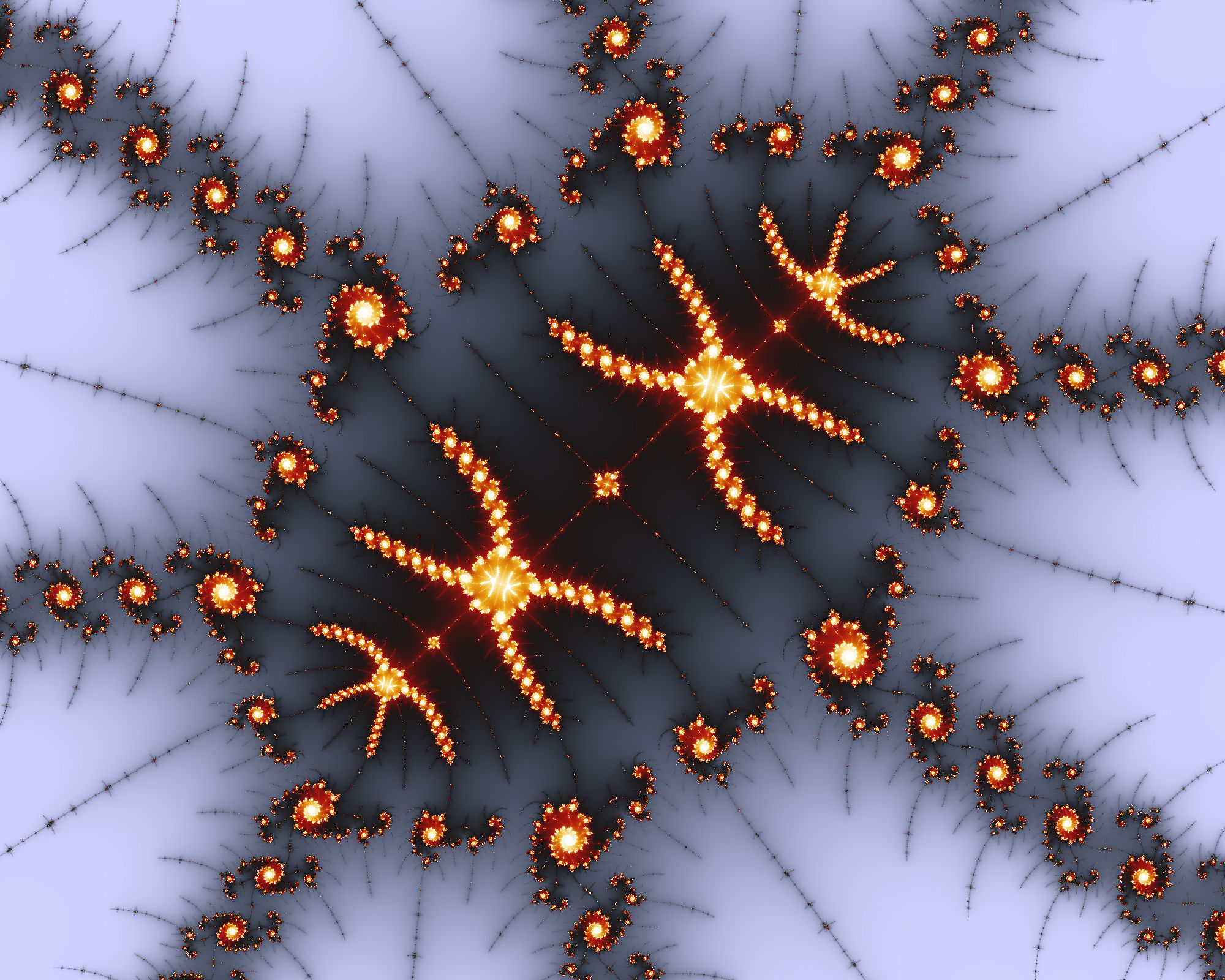
"Metaphase". The coordinates for this image are from a FractInt PAR file by Paul Derbyshire, dated 14 Mar 1996, and the title is his. It was incredibly clever of him to locate something like this, especially considering the hardware that was available in the early/mid-90's. This is one of my first deep zoom images. I have since created some animations that zoom into this location. The top thumbnail links to the earliest image (Jan 14, 2002) of this location that I can find on my system, which is rather small. The bottom thumbnail links to a high-resolution 2000x1600 image from April 2004. The size of the images is 5.0e-30. The bottom image does not use the exact coordinates form the original PAR file, but rather is at a slightly different location. Still, it looks essentially identical to the image at the original coordinates. |
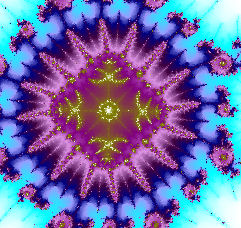 |
Continuing to zoom in to the Metaphase structure above. The exact magnification is unknown. |
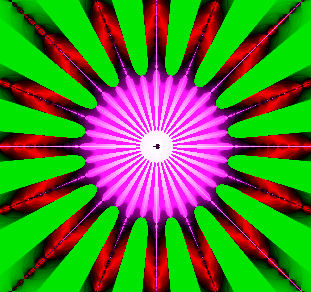 |
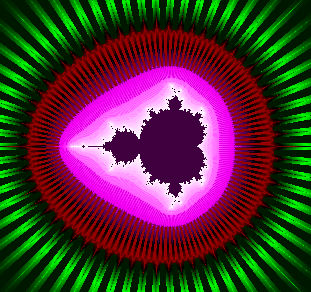
My first image deep zooming into a mini-brot on the zero axis. This area is a rich source of relatively easy deep zooms since the iteration count tends to remain fairly low as you zoom in compared to other areas in the set. I think the "40a" in the title refers to E40 being the magnification, although I don't have any documentation to confirm this. The "prec6" in the title means that 160 bits were available, which means it must be less than E48 for sure. |
 |
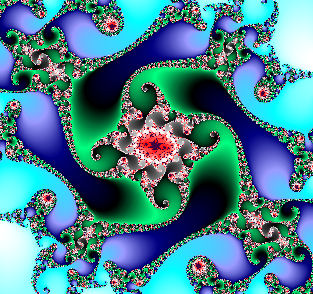
Zoom41 must refer to the size of the image being E41. This is dated Jan 15, 2002 and is also a mini-brot on the zero axis. It reminds me of the "horizontal hold" image that was generated long ago by the real pioneers of deep zoom imaging of the Mandelbrot set, although this image is nowhere near that level of zooming. |
 |
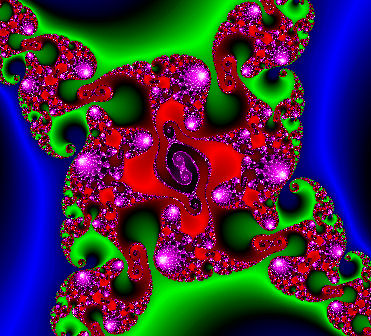
My first deep zoom into the main cusp, an area which turned out to be my favorite for many years, so much so that it is going to get its own whole page soon. There is incredible richness of structure here and the spirals and pods always manage to arrange themselves in the most amazing patterns. Unfortunately, the iteration counts go up extremely fast in this area and it is very difficult to generate animations here. |
 |
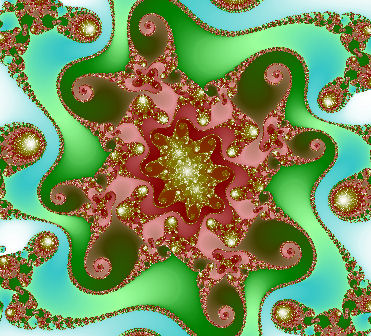
Jan 20, 2002. This image is a deep zoom to 1.9e-15 in the cusp. It's only interesting to me because it's the first one where the BMP file name matches the historical log file name, so I can be sure I know where it is and what its zoom factor is. It's pretty but not spectacular. This is from the period where I was in love with the RGB-violet color palette. |
 |
Finally breaking away from the RGB palette. Another image from the cusp, 6e-15 deep zoom. |
 |
Jan 20, 2002. The deepest zoom up to this point in the past. The size is 4.6e-45. |
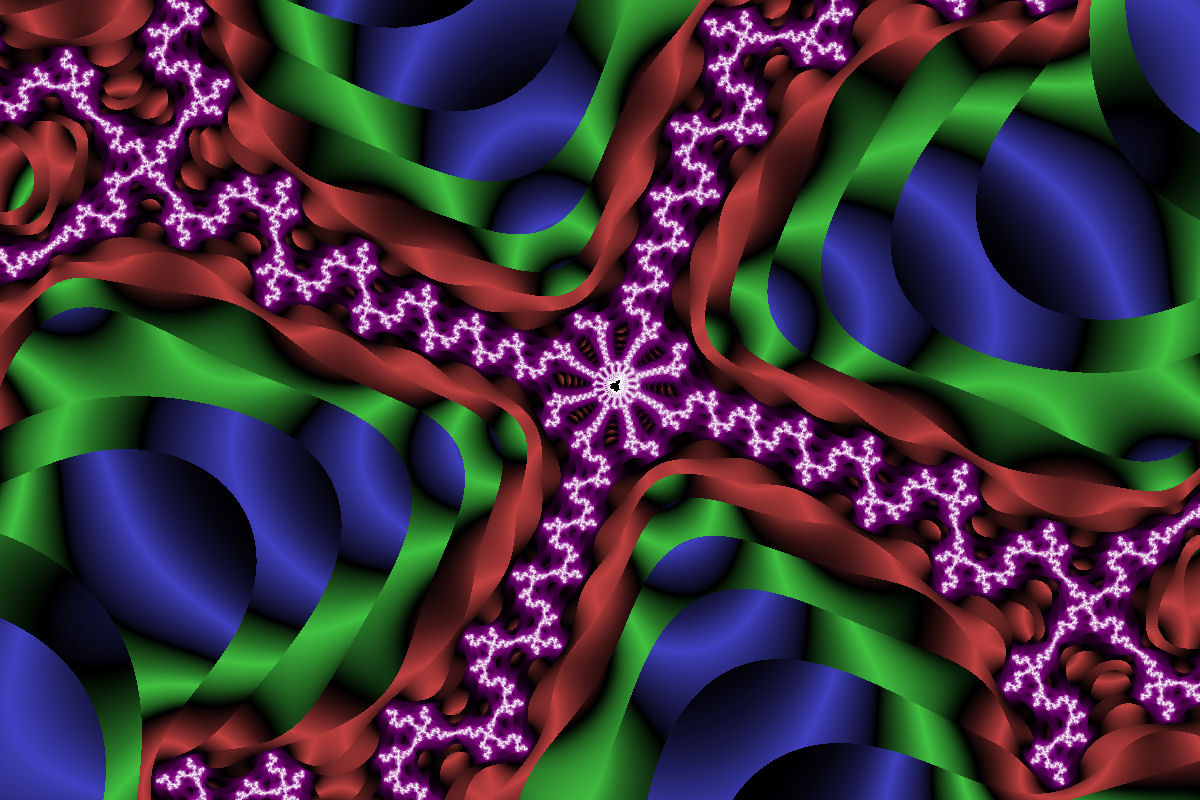 |
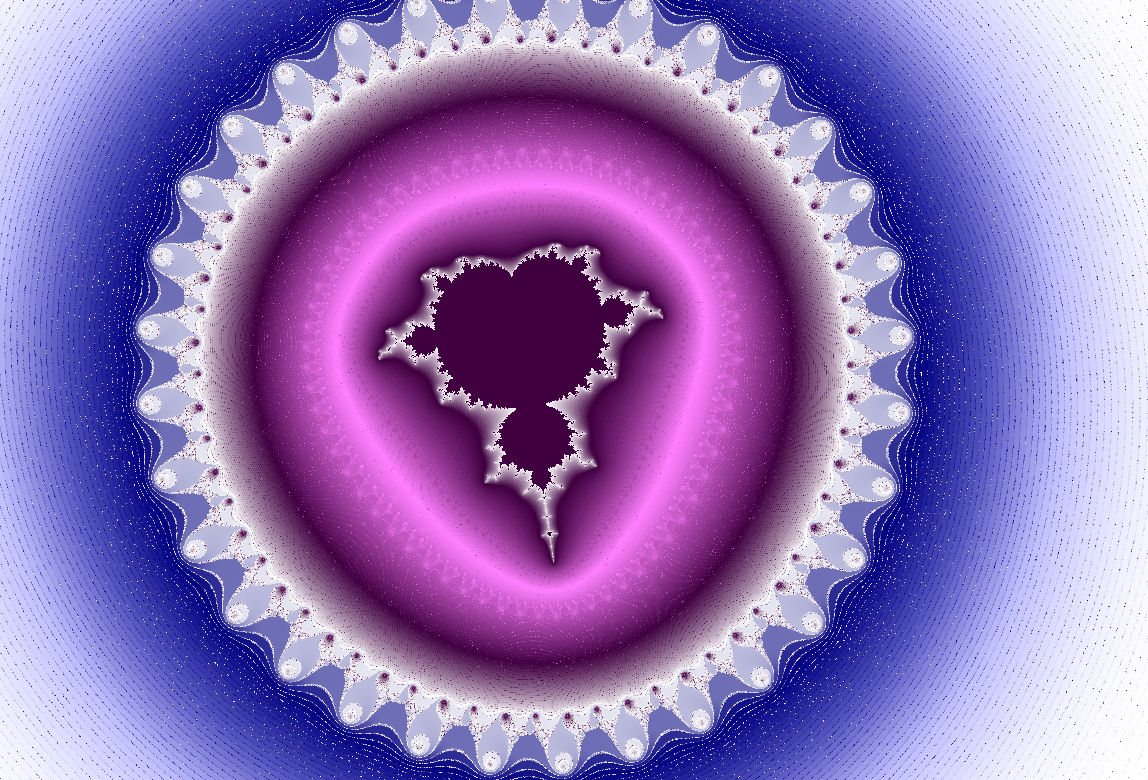
Jan 23, 2002.I have no idea anymore why this was called "test image", but you have to love the distance estimator's cool dwell bands. You can still see the bright banding from the linear color palette interpolation. The location and zoom of this image were not recorded. |
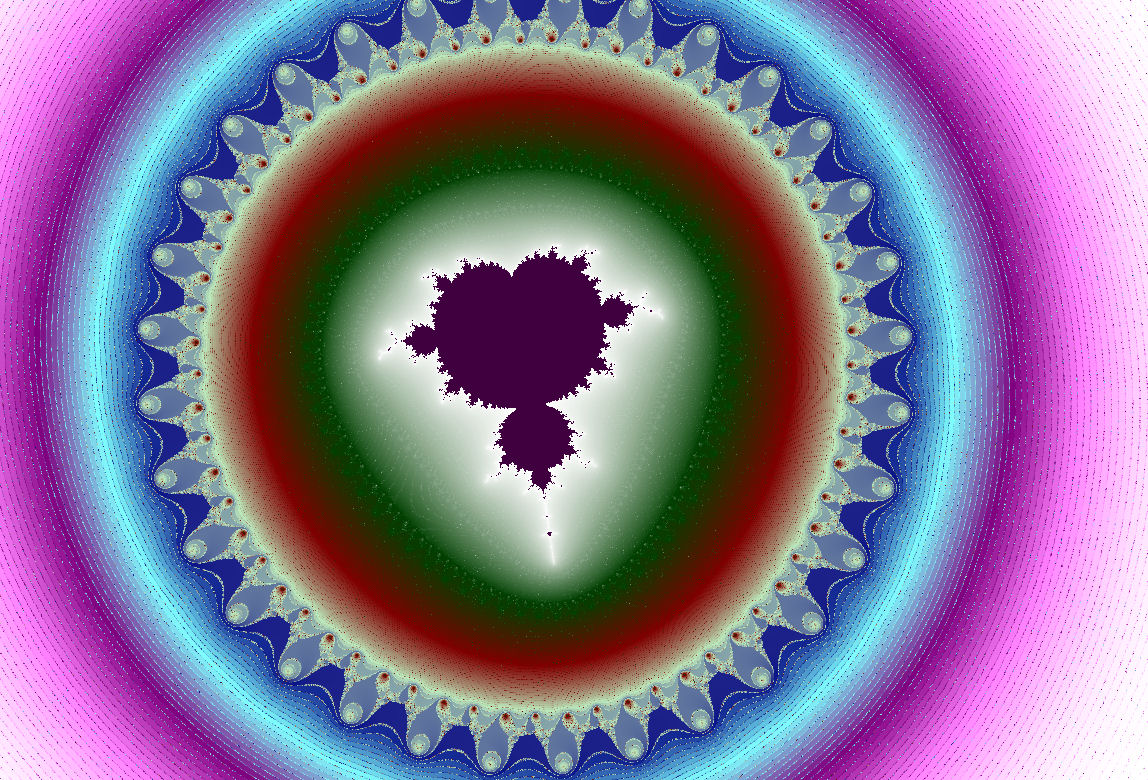 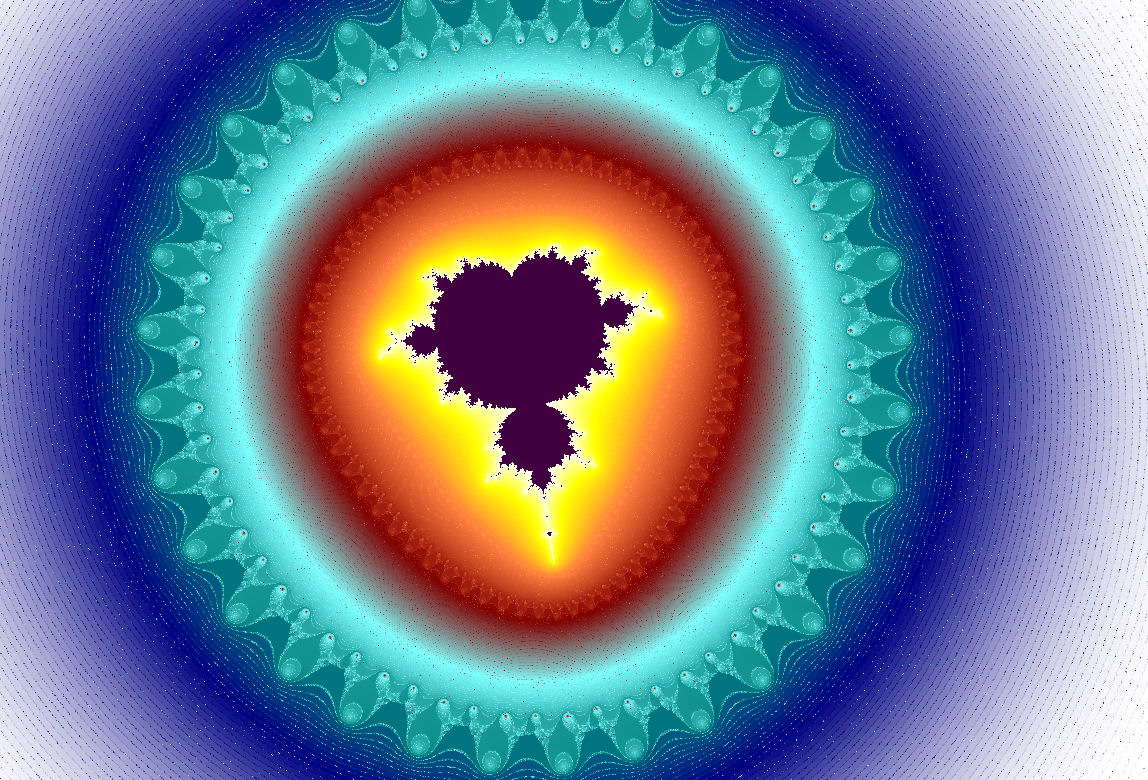  |
Feb 9, 2002. Three different colorings of a modest deep zoom to
2.37e-32.
These images are some of my favorite. Consider each of the tiny little barely-visible spirals around the mini-brot in the center. Each of them has thousands of is its own little spirals and M-sets, going on deeper and deeper forever. It's sometimes easy to ignore the staggering magnitude of the depth of zooms of these images, but this one always makes me just pause and contemplate the profound, awesome magnitude of this object. It also makes me think how little of it has really been explored. What's in those arms? How different is one arm from another? How do the images in the green area differ from the images in the pink area? This could go on forever, and the same mini-brots keep appearing, with an almost psychotic relentlessness. And this all comes from that one simple little quadratic polynomial. It's so simple that it is probably universal--if there is life on other planets, or if life evolves in another Universe, it is almost certain they will discover exactly these same images. |
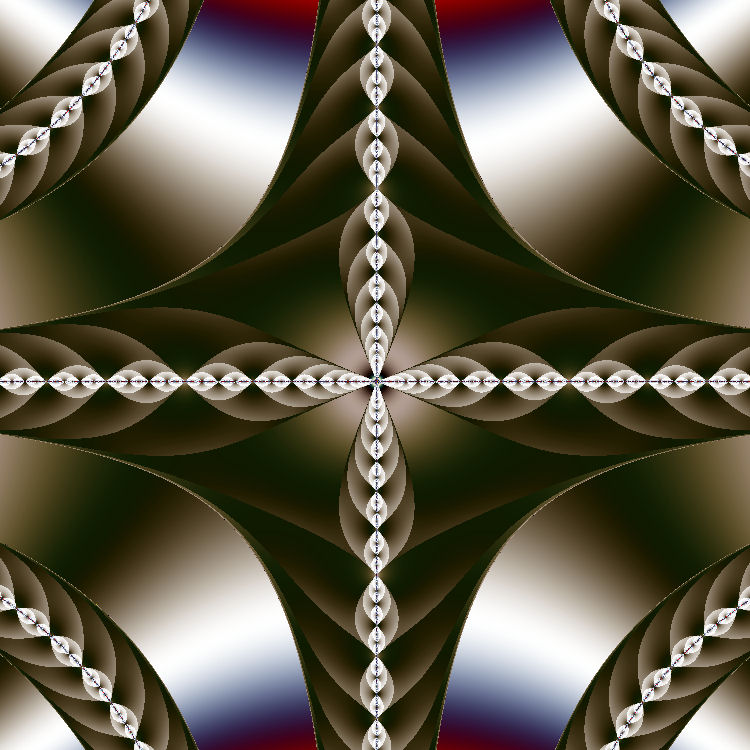 |
Mar 24, 2008 Size: 1.0e-99 750x750 Something I found along the way to developing an extreme deep zoom that will be published at some point. I just love the colors here. This is at the center of the 1e-98 image below. |
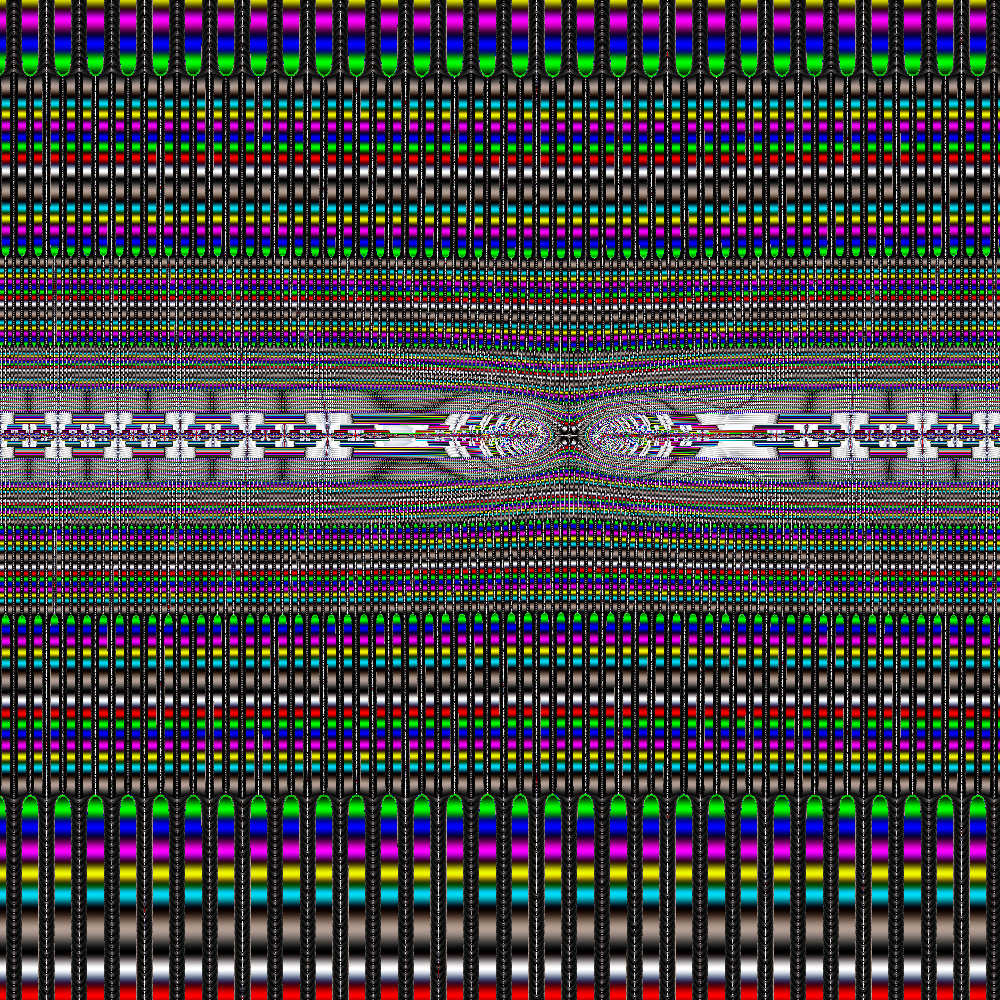 |
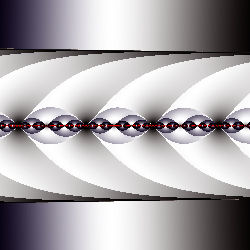
Mar 24, 2008 Size: 1e-98 1000x1000 (442 KB JPG) This is me attempting to recreate an effect similar to the famous (yes, it is famous) "horizontal hold" effect that was seen with some serious deep zooms using FractInt. They were actually realized at E-1500, which was an amazing accomplishment on a 486(!!). I'm not going to do a zoom that deep any time soon, but this gives a rough approximation. Can you imagine if you saw this come out of your software after spending days writing your new high-precision math function? You'd have to be pretty confident to say it was working right! This looks nothing like the swirls and spirals that the Mandelbrot set usually produces. If you look really closely you will see the 1e-99 image above in the center of this image. |
 |
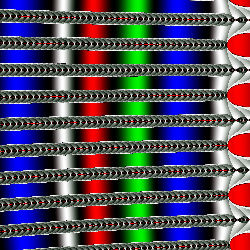
Mar 23, 2008 Size: 3.3e-66 250x250 |
 |
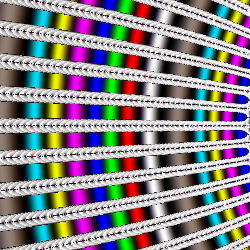
Mar 24, 2008 1e-63 250x250 On the way to the 1e-98 horizontal-hold image above, taken in the cusp of a mini-brot |
 |
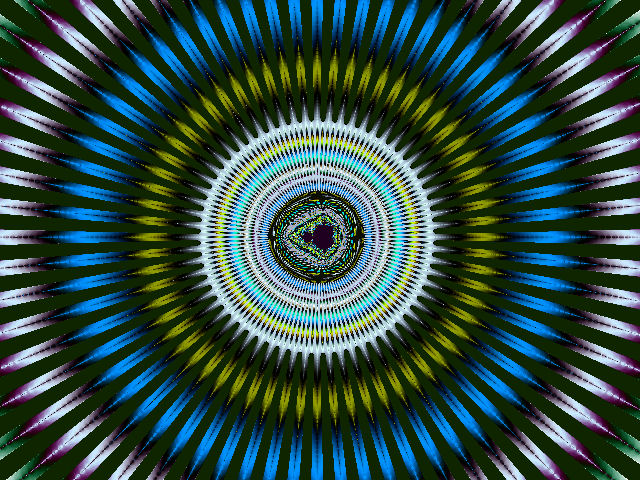
Mar 24, 2008 1e-64 250x250 Related to the horizontal-hold images, but taken near the antenna of the mini-brot in the images above. |
 |
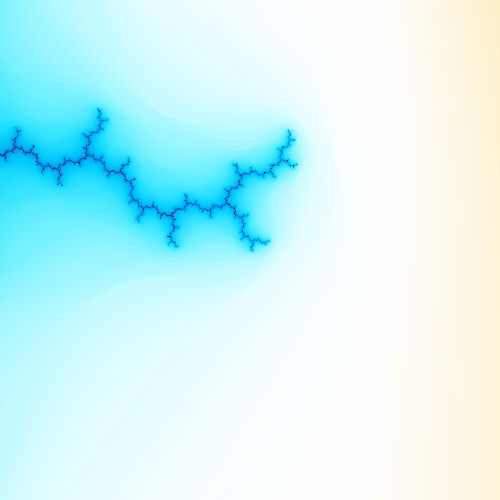
Mar 22, 2008 Size: 7e-100 640x480 I have completely forgotten why I made this. Probably it is related to the upcoming Centanimus project since it looks a lot like its end point. |
 |
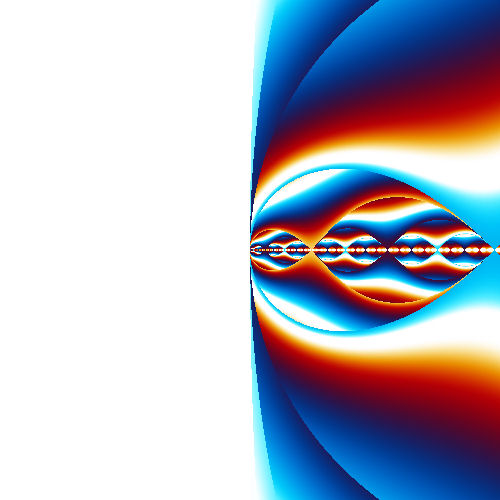
Mar 23, 2008 500x500 1e-140 A test of my program after recompiling with a new maximum high-precision limit of 480 bits (144.5 digits). This is zoomed in to the fixed point at (0,1). No matter how close you get to this point, it always looks the same, although, believe it or not, as you zoom in, the fiber actually rotates around the point because the fiber is actually a spiral. See the animations E100.wmv and ZeroOne.wmv. |
 |
Mar 23, 2008 500x500 1e-140 More testing, this time zooming to the fixed point at (-2,0), the tip of the antenna (utter west). As with (0,1), this point looks exactly the same no matter how close you zoom in. |
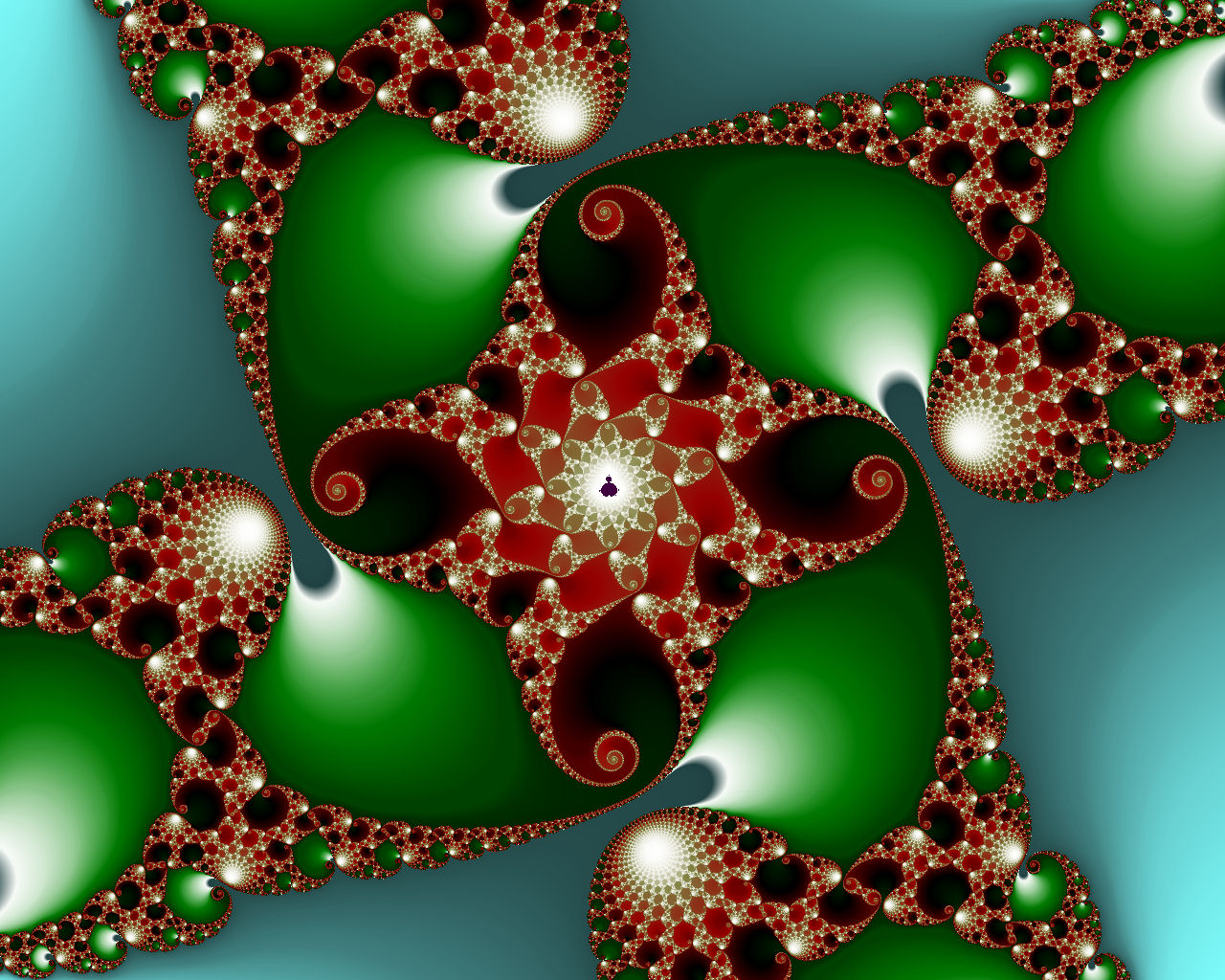 |
One of my first really impressive images with a great color palette. I printed this one to 8x10 photo paper and framed it. I have lost the record of where this is located, but it's clearly somewhere in the main set's cusp. |
|
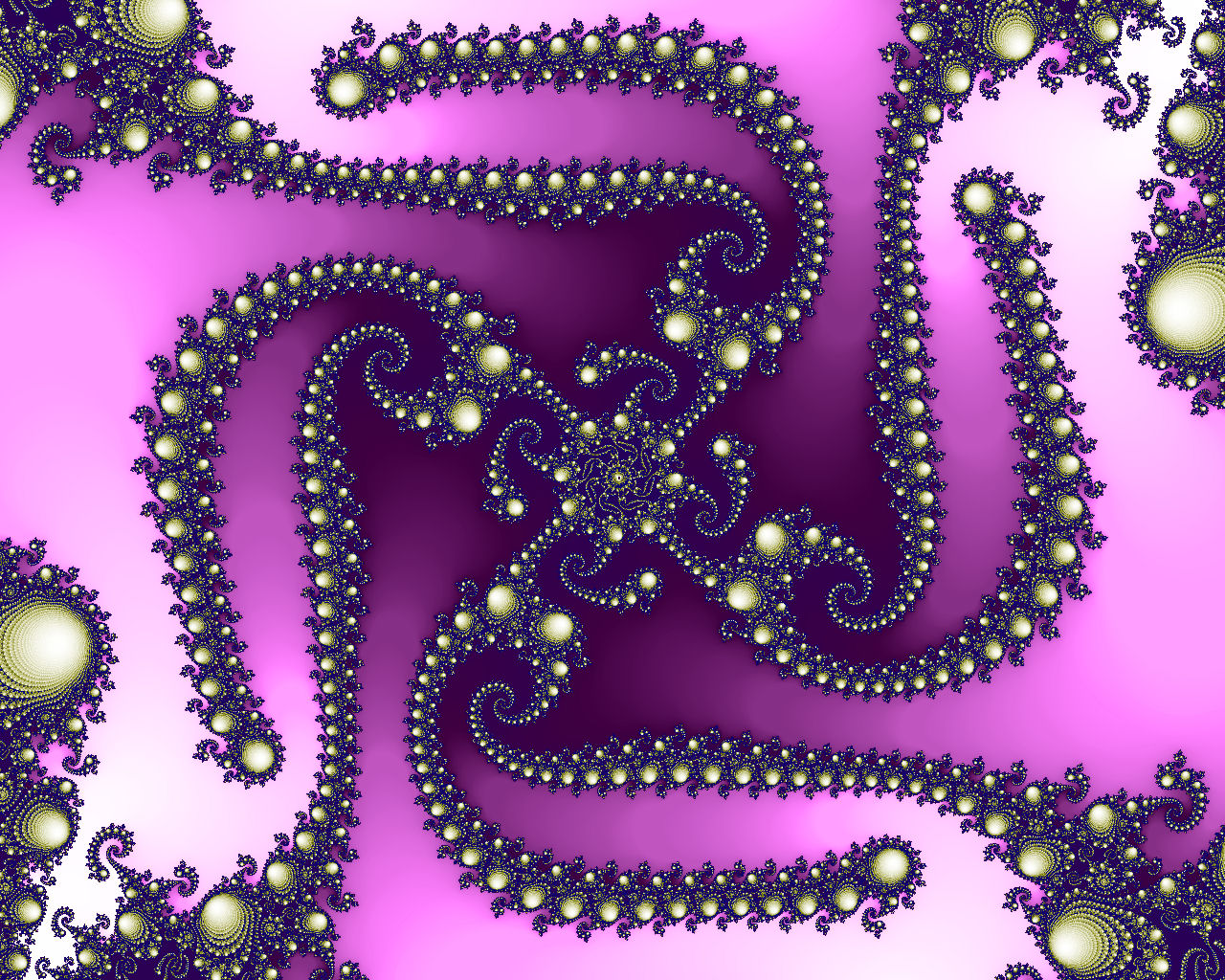
Feb 8, 2002 1280x1024 Size: 7.99e-12 The same image with two different colorings. These are both high-resolution images at the highest zoom possible with standard-precision math. The blue one also got printed to 8x10 and framed. |
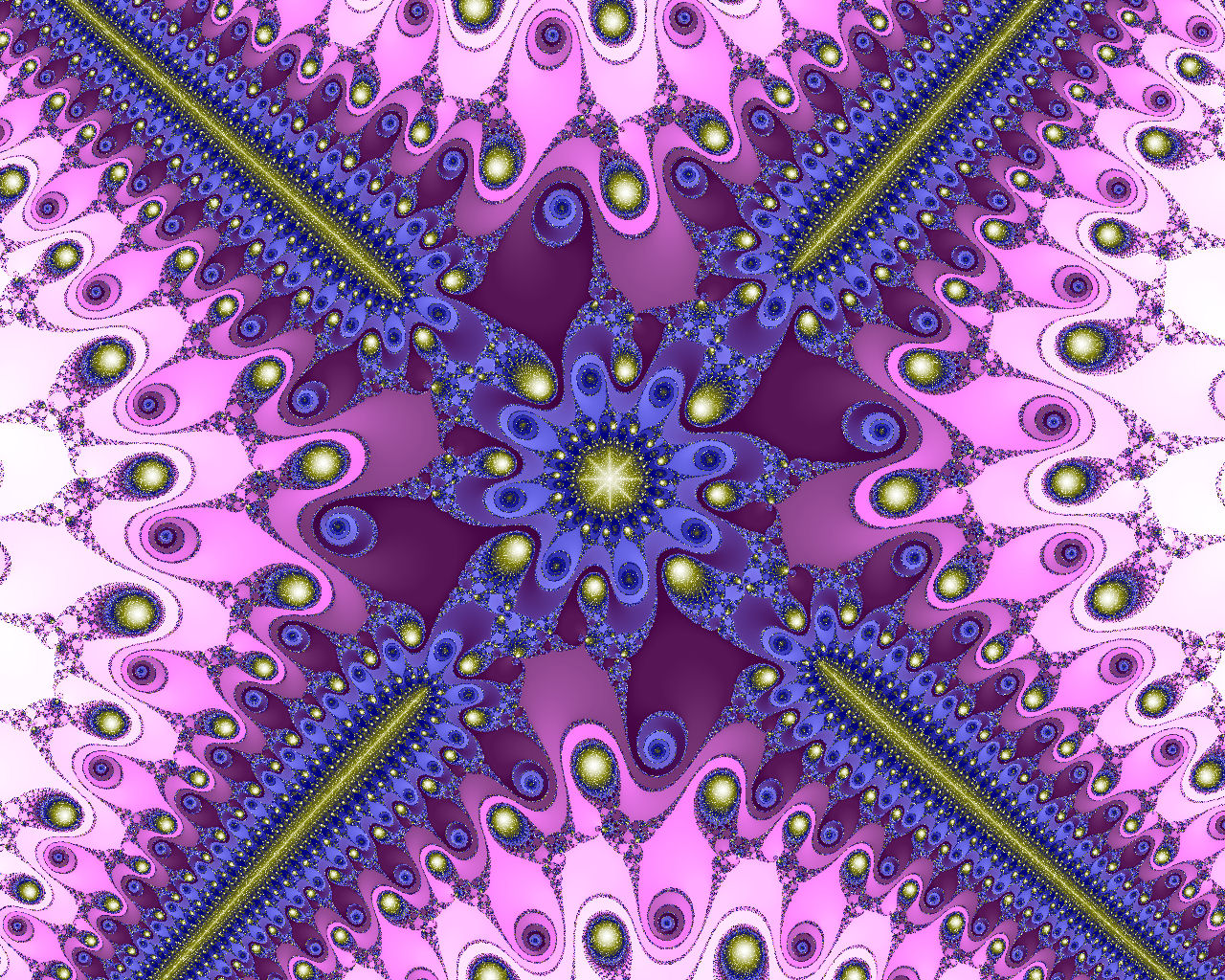 |
Feb 20, 2002 Another nice image with no record of where it is from, but probably you could figure it out based on how it looks. |
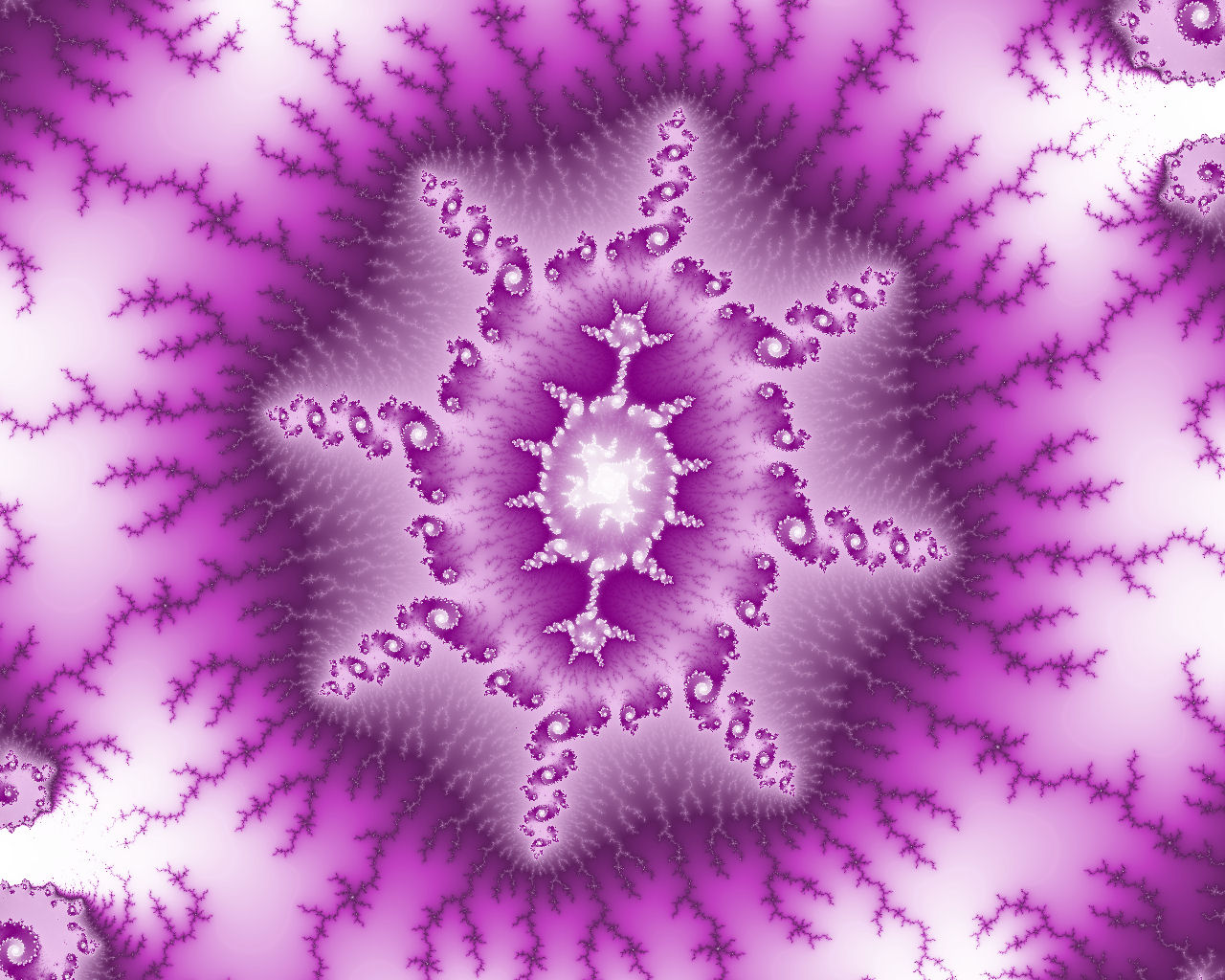 |
Apr 6, 2002. |
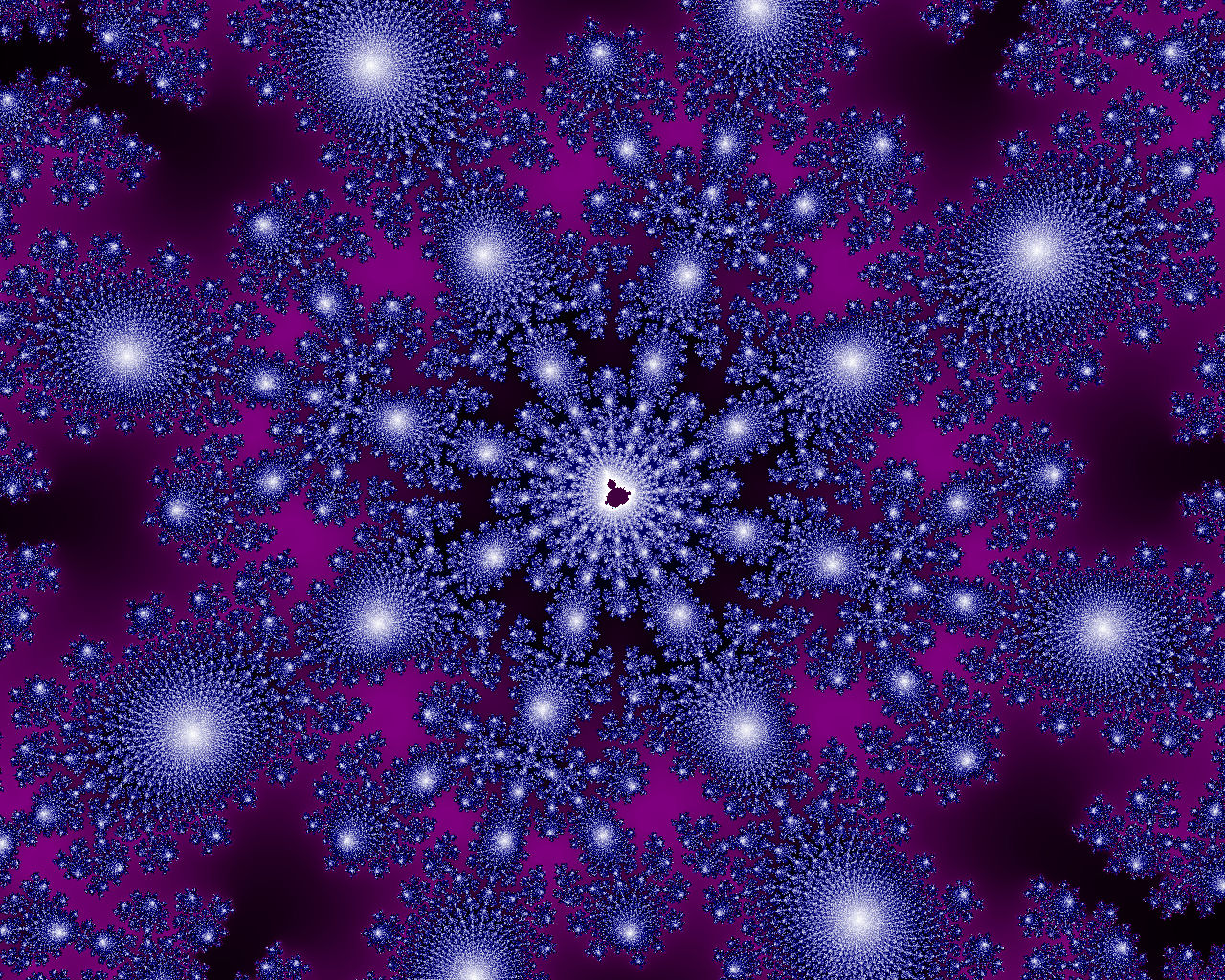 |
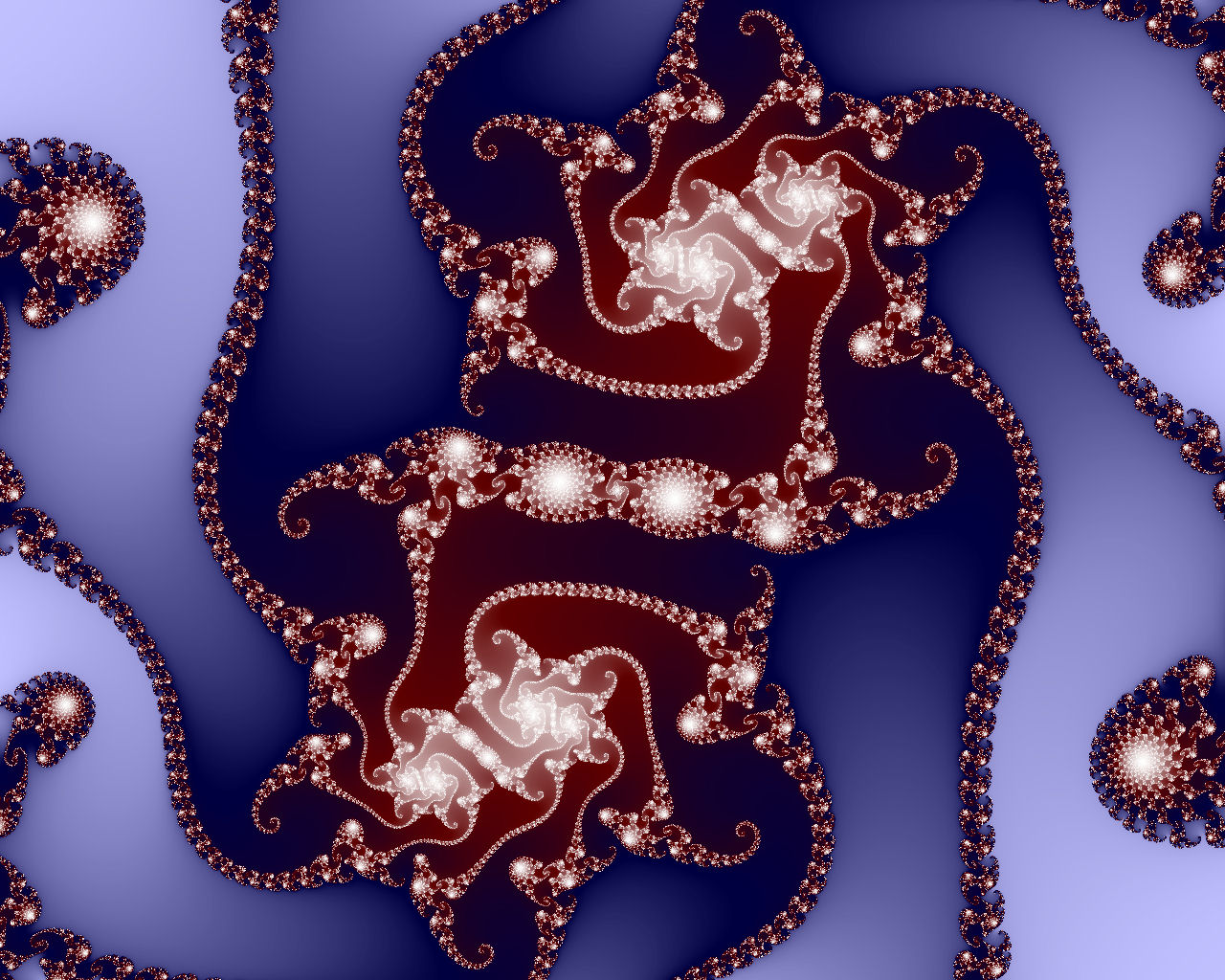
Nov 19, 2002.
I didn't record where this was, but it's probably not a deep zoom. It's pretty but could use some anti-aliasing. |
 |
Nov 21, 2002.
This is really one of my favorite. Unfortunately, the raw data is not in my history folder and I don't know exactly where the image is located, but again it is somewhere in the cusp of the main set and doesn't seem to be a deep zoom. |
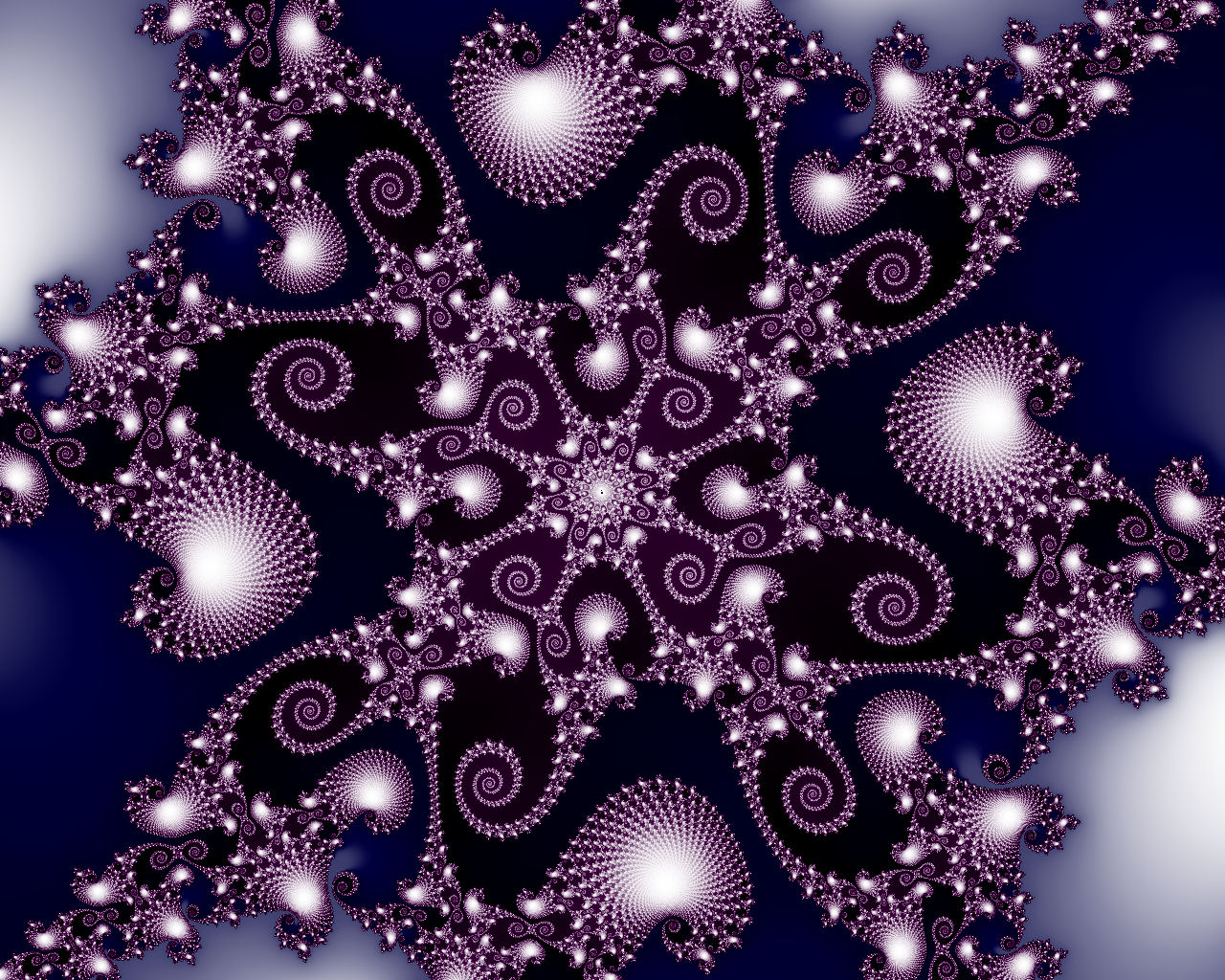 |
Jan 27, 2003 1280x1024 Size: 2.81e-12 Another heavily anti-aliased zoom in the cusp of the main set. The size is right at the borderline of the maximum zoom that can be drawn with native floating point precision at this resolution. |
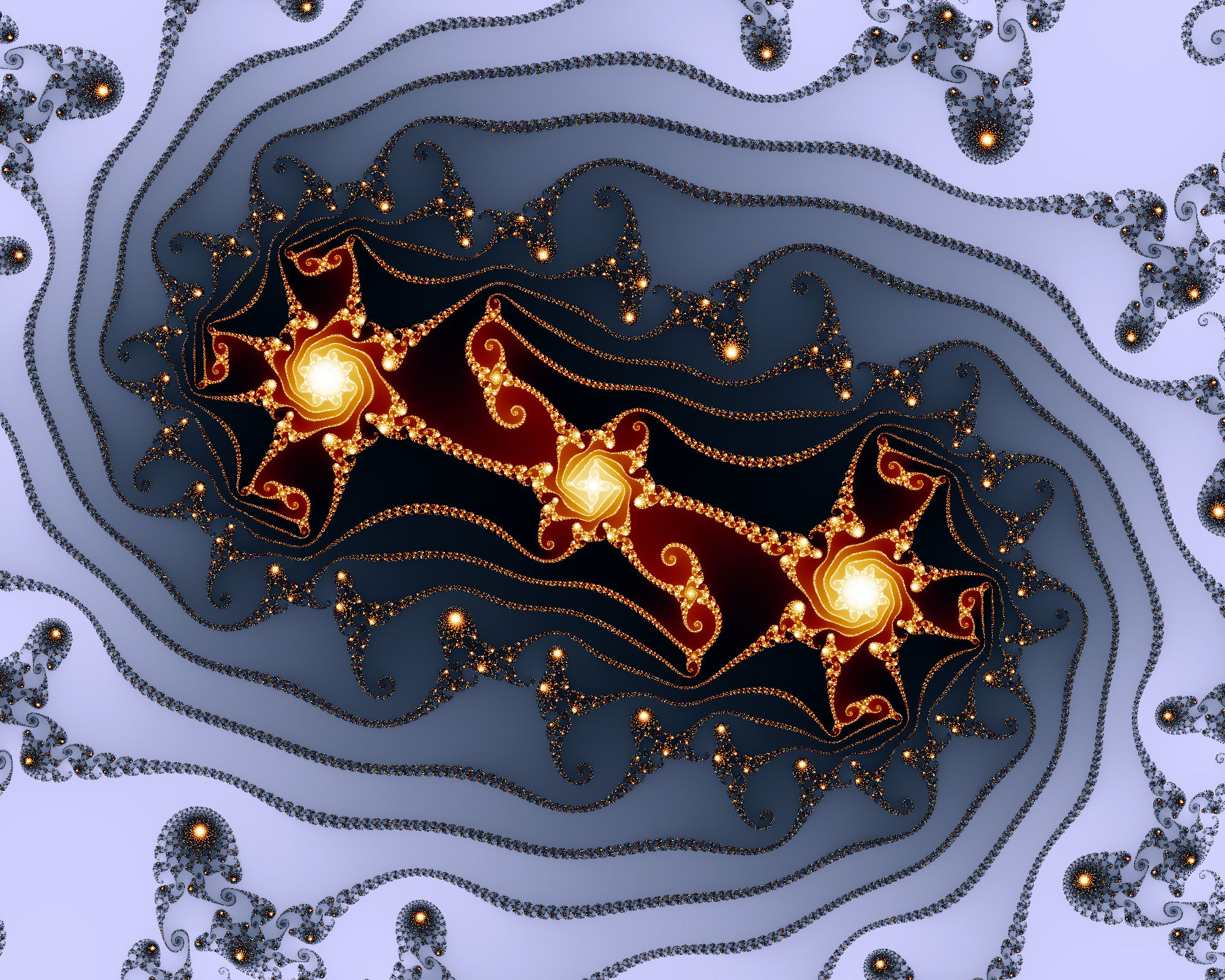 |
Sep 3, 2004 2000x1600 Size: 3.71e-31 |
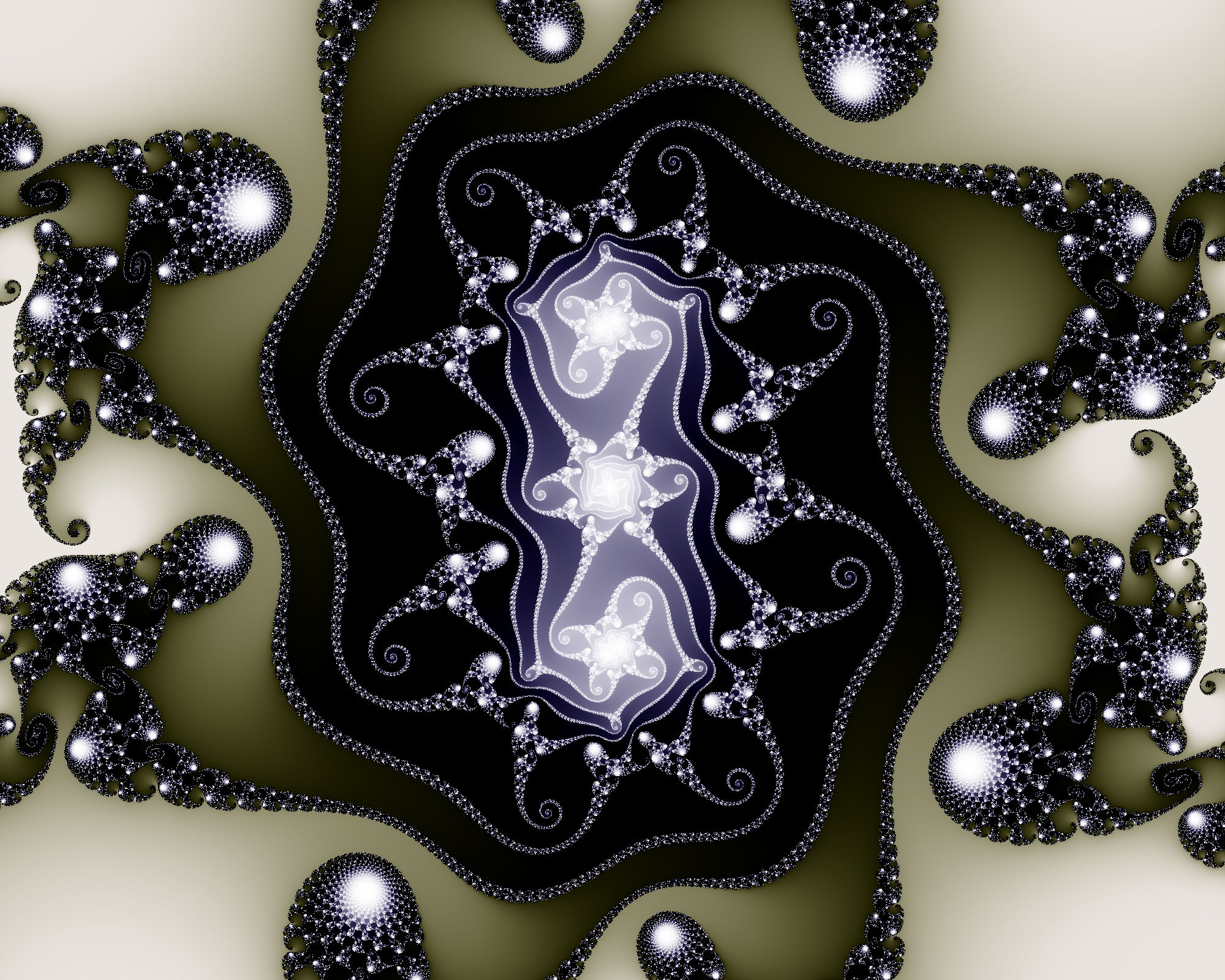 |
Jun 6, 2005 2000x1600 Size = 9.71e-28 |
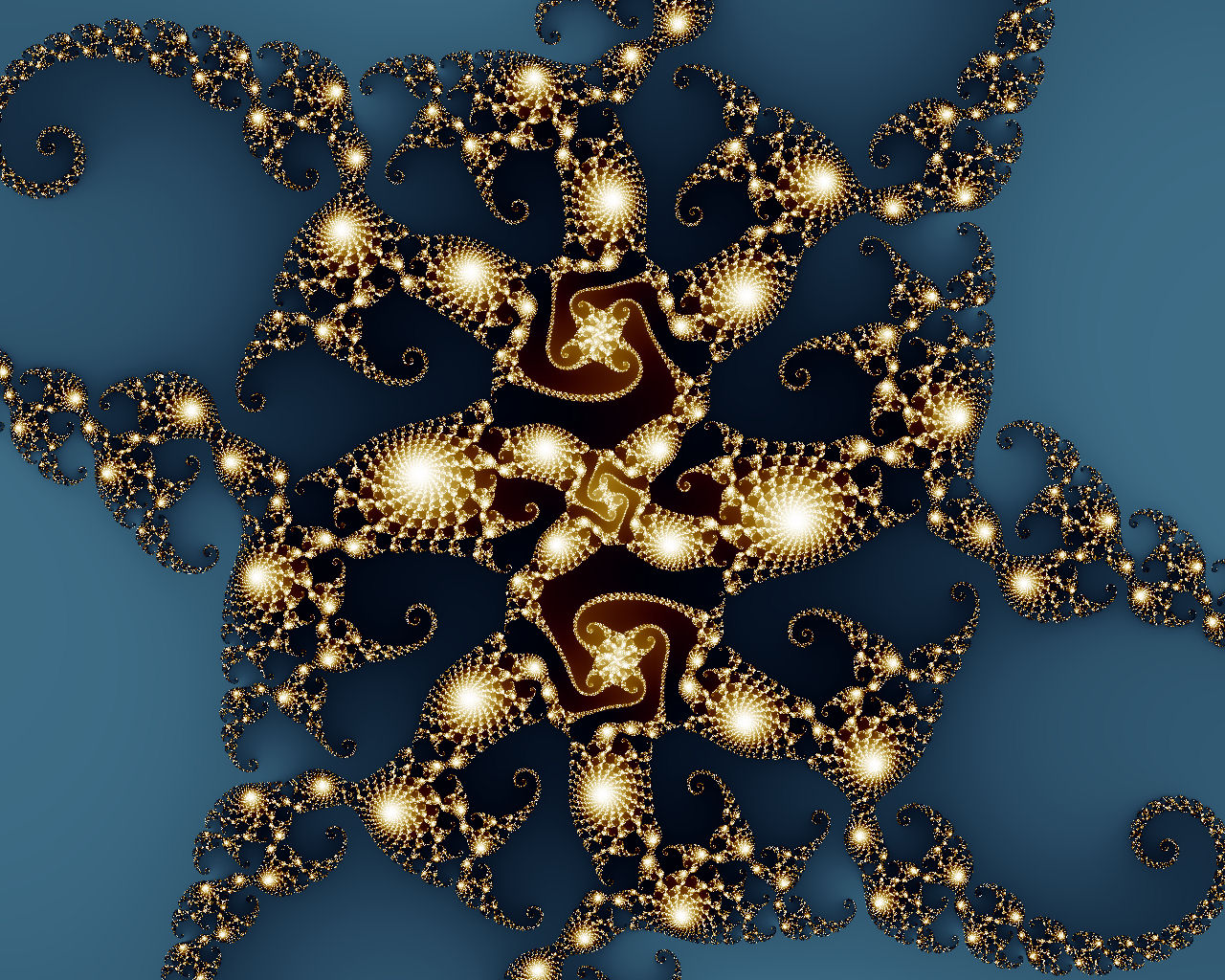 |
Aug 6, 2006 1280x1024 Size: 3.46e-18 |
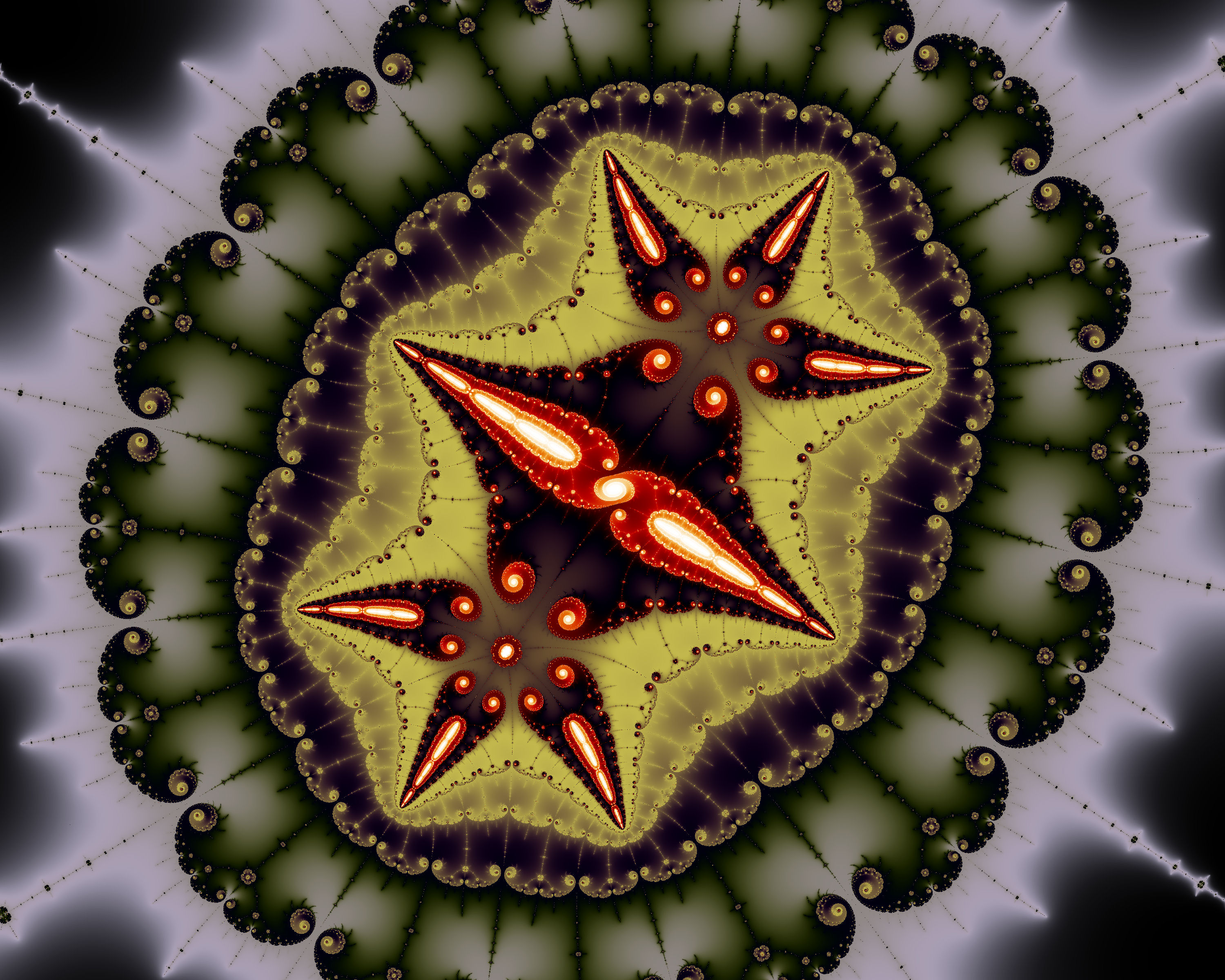 |
May 6, 2007 3000x2400 Size: 4.04e-32 |
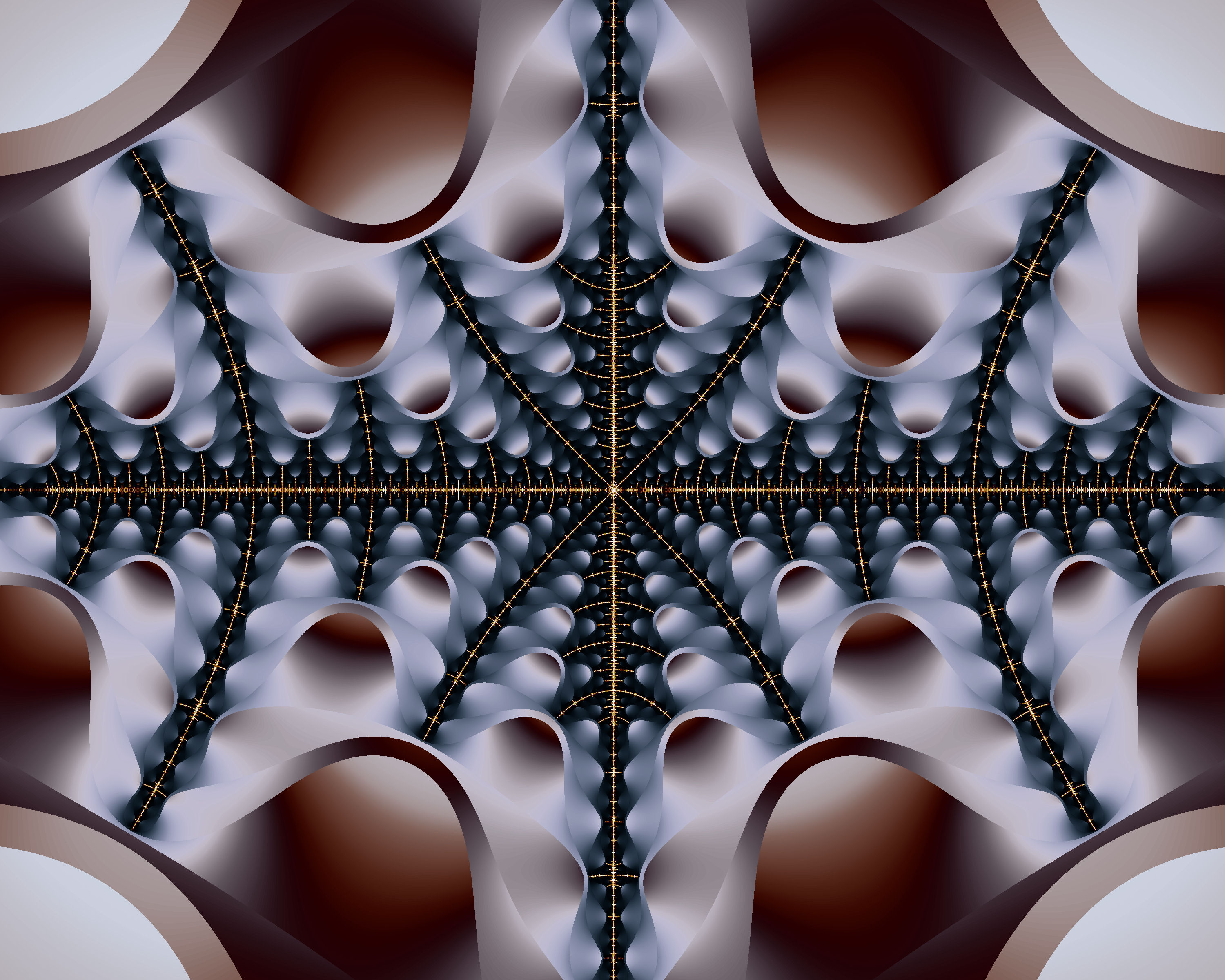 |
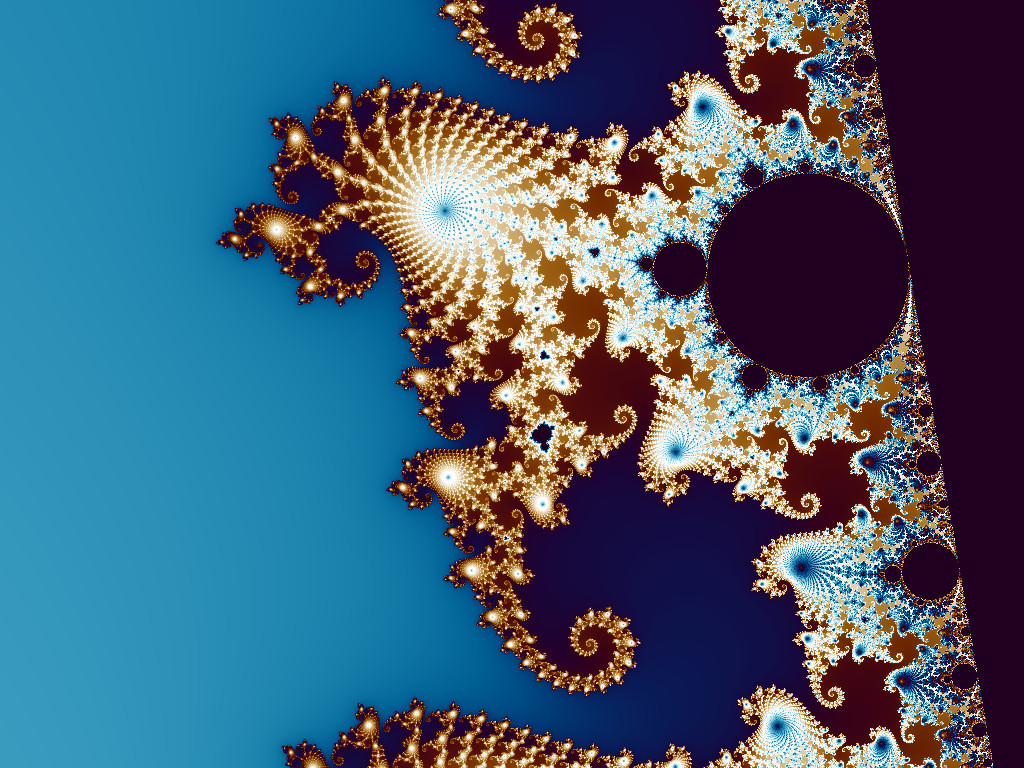
Jun 19, 2007 3000x2400 This is a low-precision zoom to an area in the western antenna using the distance estimator drawing method. Is this gorgeous or what? Definitely worth 7.2 million pixels. Size: 4.8e-11 I made a quick (36 seconds) animation into this location. 2.5 MB MP4
320x240 15 fps |
 |
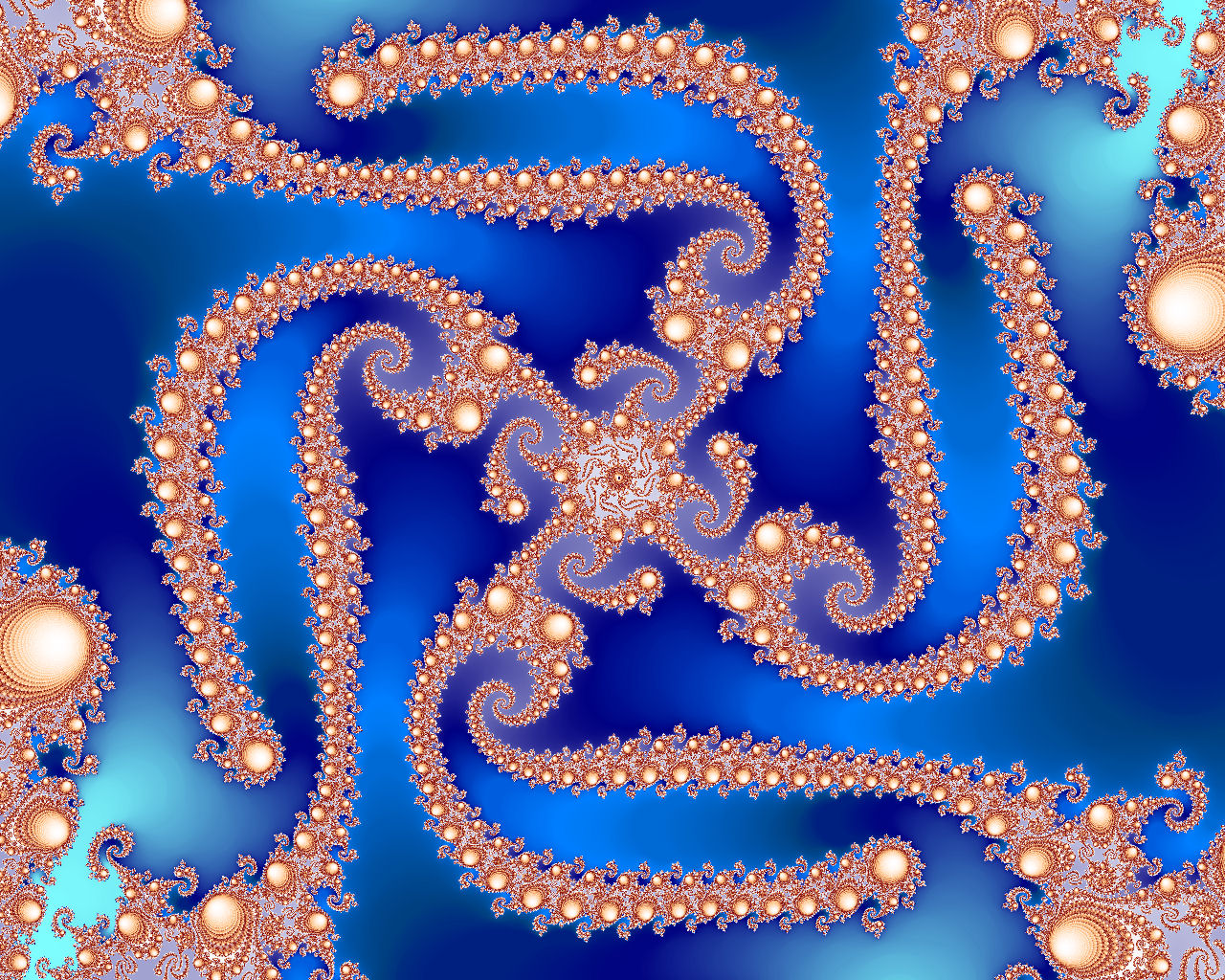
Sea Horse valley example. This was done with
25X oversampling for extreme anti-aliasing to produce a very
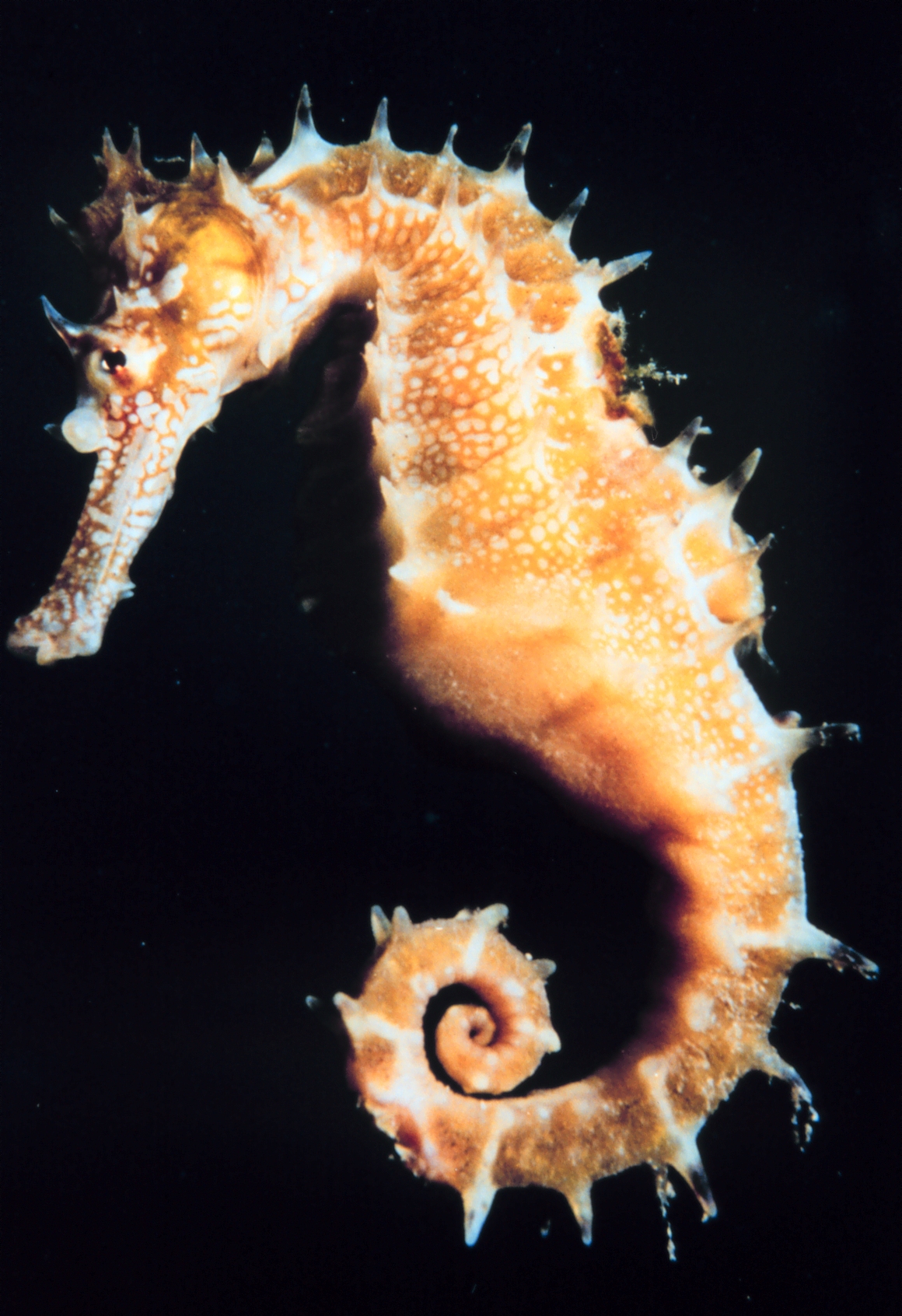
high-quality, noise-free image. Click here for an image of an actual seahorse (public domain image by NOAA). The genus name "hippocampus" was adopted by neuroanatomists to refer to an area of the brain that has a similar spiral shape. |
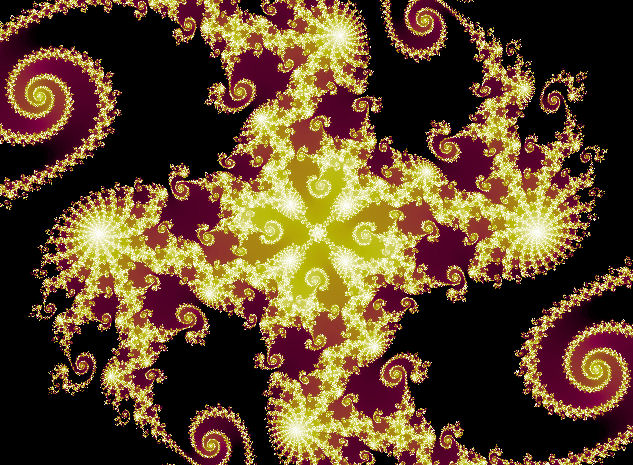 |
The earliest dated saved image I can identify
from my Mandelbrot set explorer, dated December 8, 2001. I know there are earlier images, but I can't be sure about the dates on some of them. For many of the images from this time, I forgot to save the image location, so I don't know exactly where in the set they are from. This image is nice, but not extraordinarily interesting. It's just the earliest one I can definitively date. |
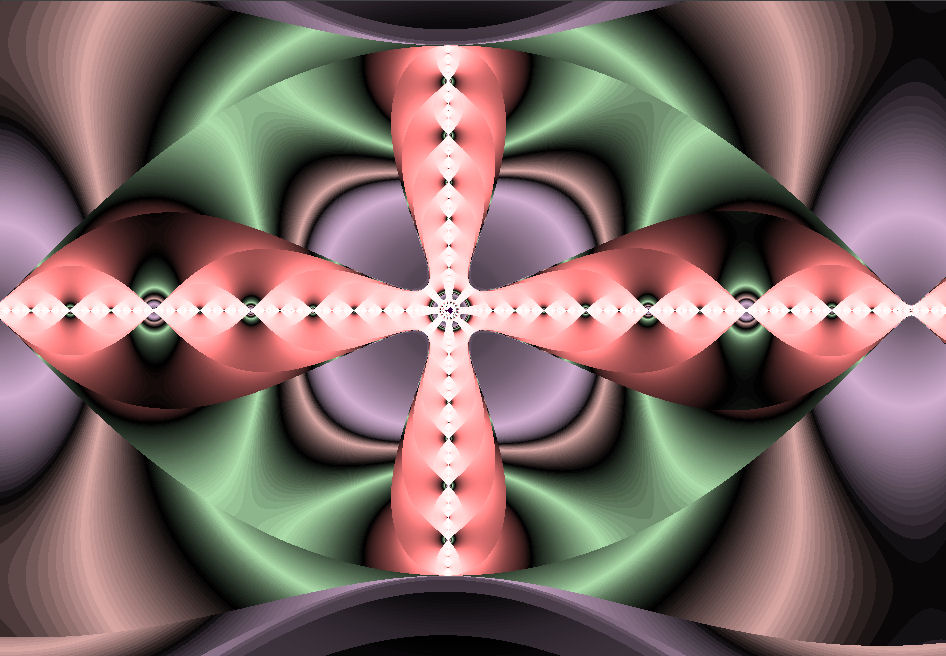 |
This is another very early image from Dec 16, 2001, demonstrating the distance estimator method of drawing. I like the way the DE highlights the dwell bands and gives a really cool gradient effect. |
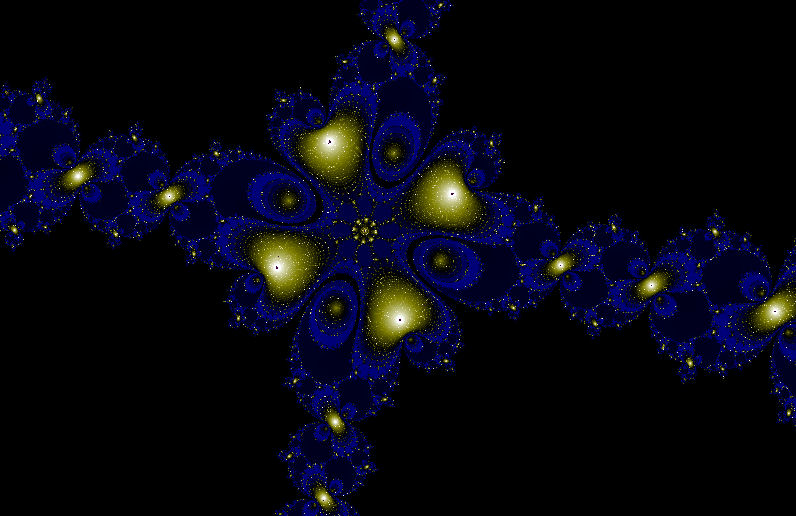 |
This image demonstrates how bad aliasing can get when drawing certain regions of the Mandelbrot set. Compare this with the next image, which was drawn with aggressive anti-aliasing. |
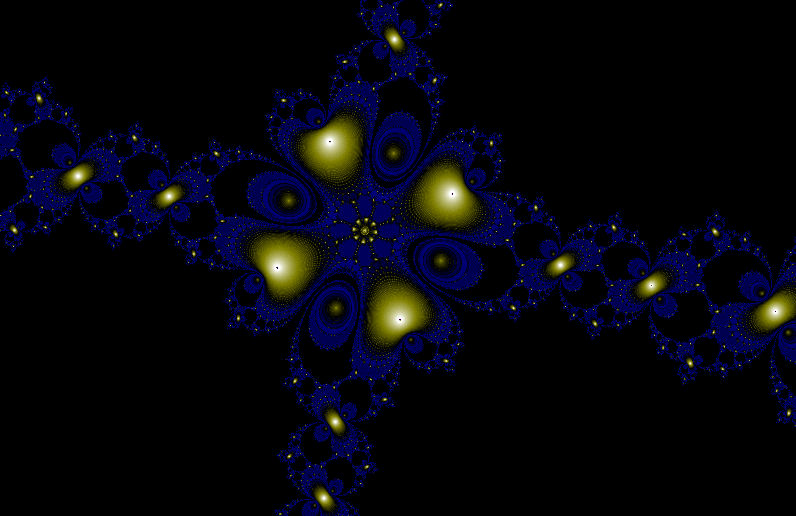 |
This image is the same as the one above, but has anti-aliasing enabled. Anti-aliasing is essentially subdividing each pixel into smaller regions, calculating a count value in each region, and averaging them together. This smoothes out the bright spots in many images but dramatically increases the time required to draw the image. |
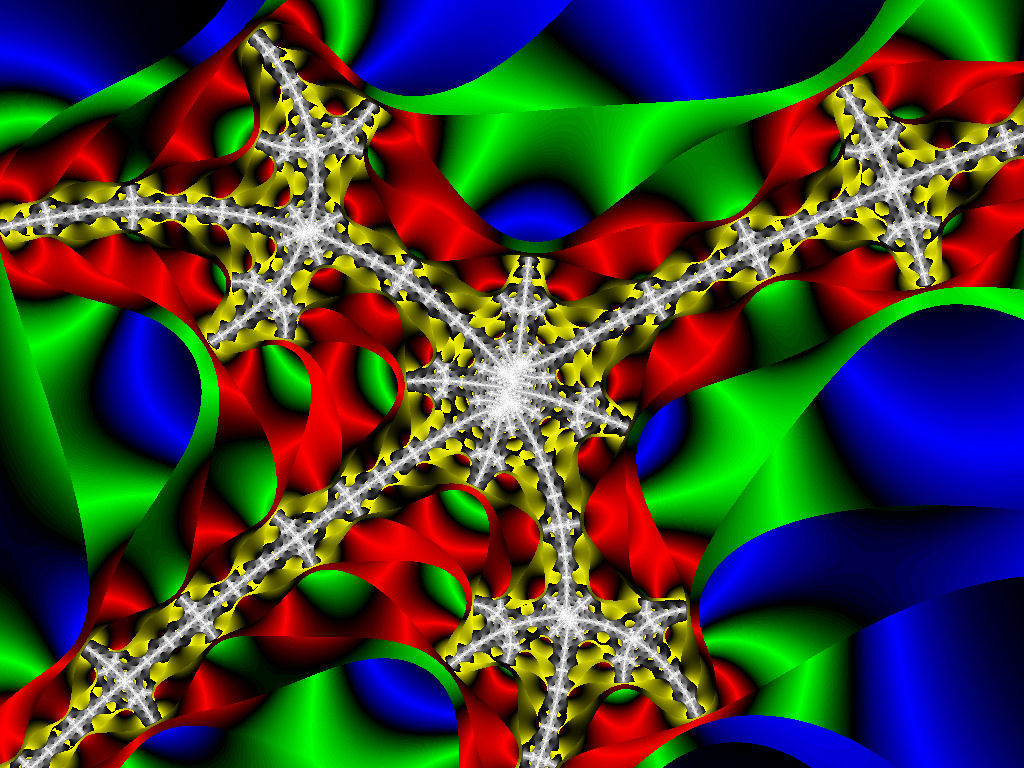 |
A small portion of a fibrous Julia set drawn with the distance estimator method. This image was created before I implemented a cubic spline interpolation for the color palette, and you can see bright bands where the linear interpolation segments meet. One of my favorite effects is using the DE method with a really saturated palette like this one, which is RGB-yellow-white. |
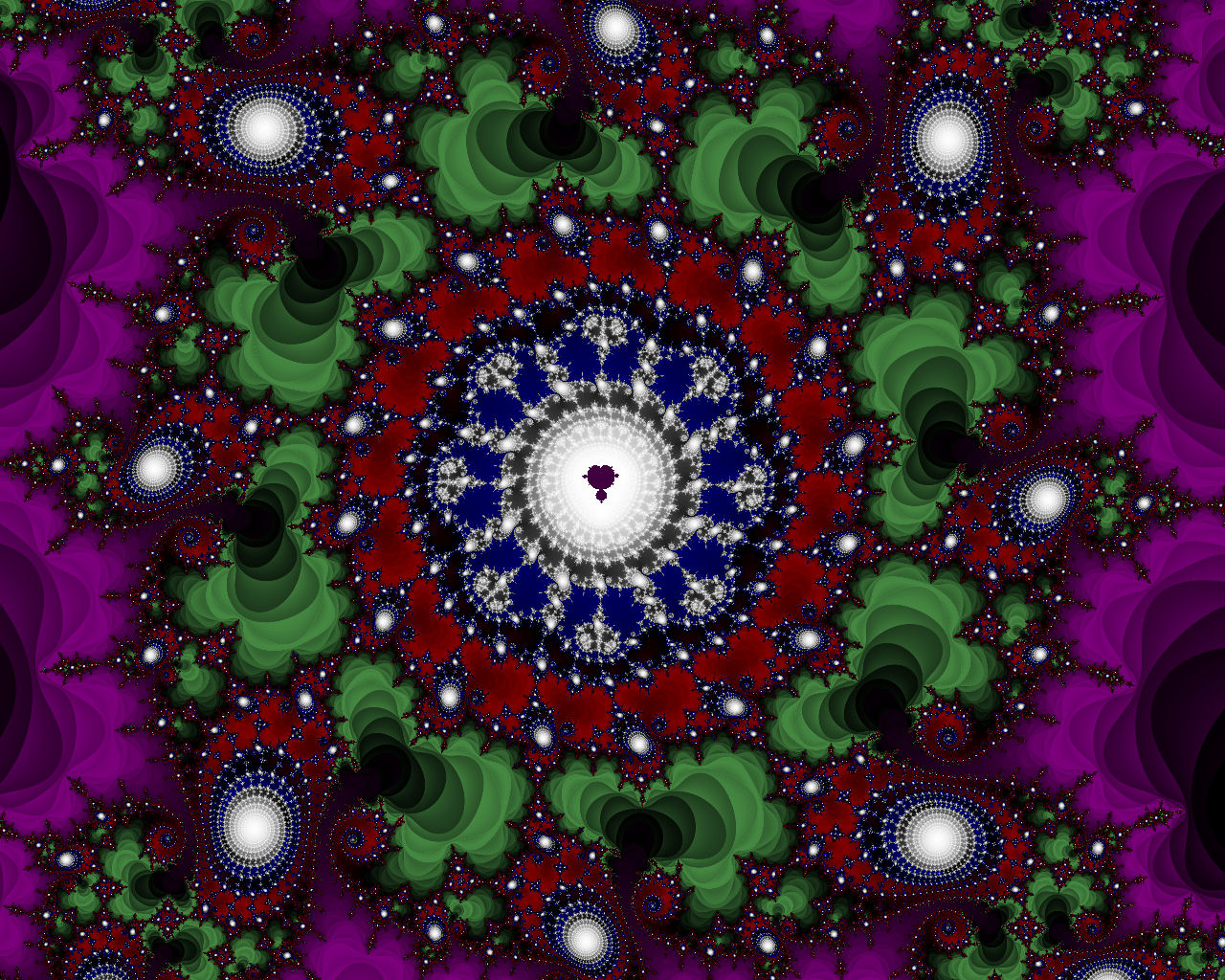 |
Dec 18, 2001. One of my favorite earlier images, and, at the time, one of the most impressive I had found, which is what led to the title "wow". The AA5 in the title refers to 5x5 anti-aliasing, which means each pixel is an average of a 5x5 subpixel grid. That is why this image is so incredibly smooth and free of aliasing. |
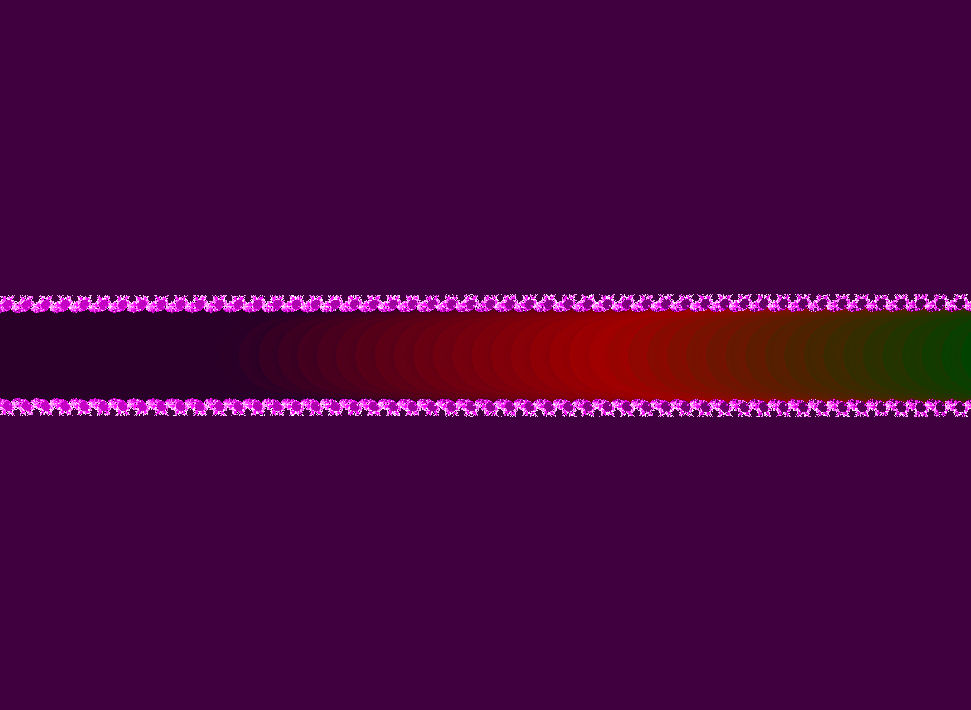 |
This is a moderately close view of the cusp of the Mandelbrot set, which is the part off to the right that folds in and actually extends all the way to (0,0) in the complex number plane. The top and bottom are actually in the set, and the narrow strip in the middle is the cusp extending inwards. This was drawn on Dec 18, 2001, way before I had high-precision math implemented, so it can't be more than E11 or E12 in magnification. Still, the flatness of the cusp is impressive. |
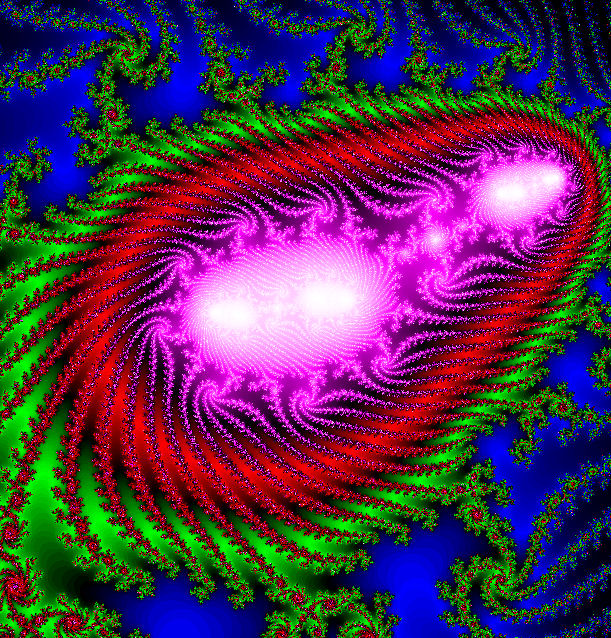 |
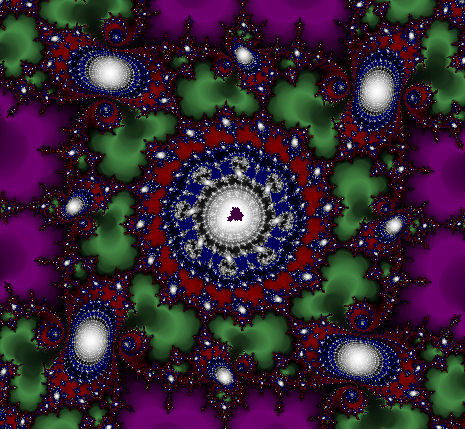
Dec 20, 2001. A "pod of doom". These were one of my favorite structures to find for a while in late 2001. |
 |
This was an attempt at recreating the "wow" image from above. It's not really high-precision, but it's from this time period in the past. I still don't know exactly where this is from since I consistently failed to document what I was doing back then. |
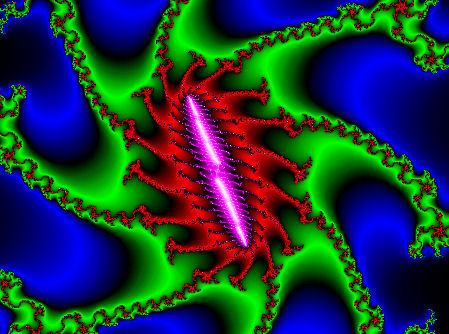 |
Feb 13, 2002 I enjoyed finding these things for a while. This kind of effect is seen when you zoom into something near the "antenna" in the west part of a set embedded within another region. |
Note on size and magnification: The sizes here (and on the Animations page) are the actual size of the smallest dimension of the image (usually vertically) in the complex number plane. Some programs describe image sizes by "magnification" which is usually related to the reciprocal of the image size. A size of, say, 1E-100 corresponds to a magnification of 1E+100. Some software uses the half-height of the image, so there may be an additional factor of two involved in conversion.
All content Copyright by Michael Condron. All rights reserved unless otherwise noted.
You may download, save, and print a single copy for personal use only.
Music by various sources used with permission.
Please refer to individual video file credits for details.